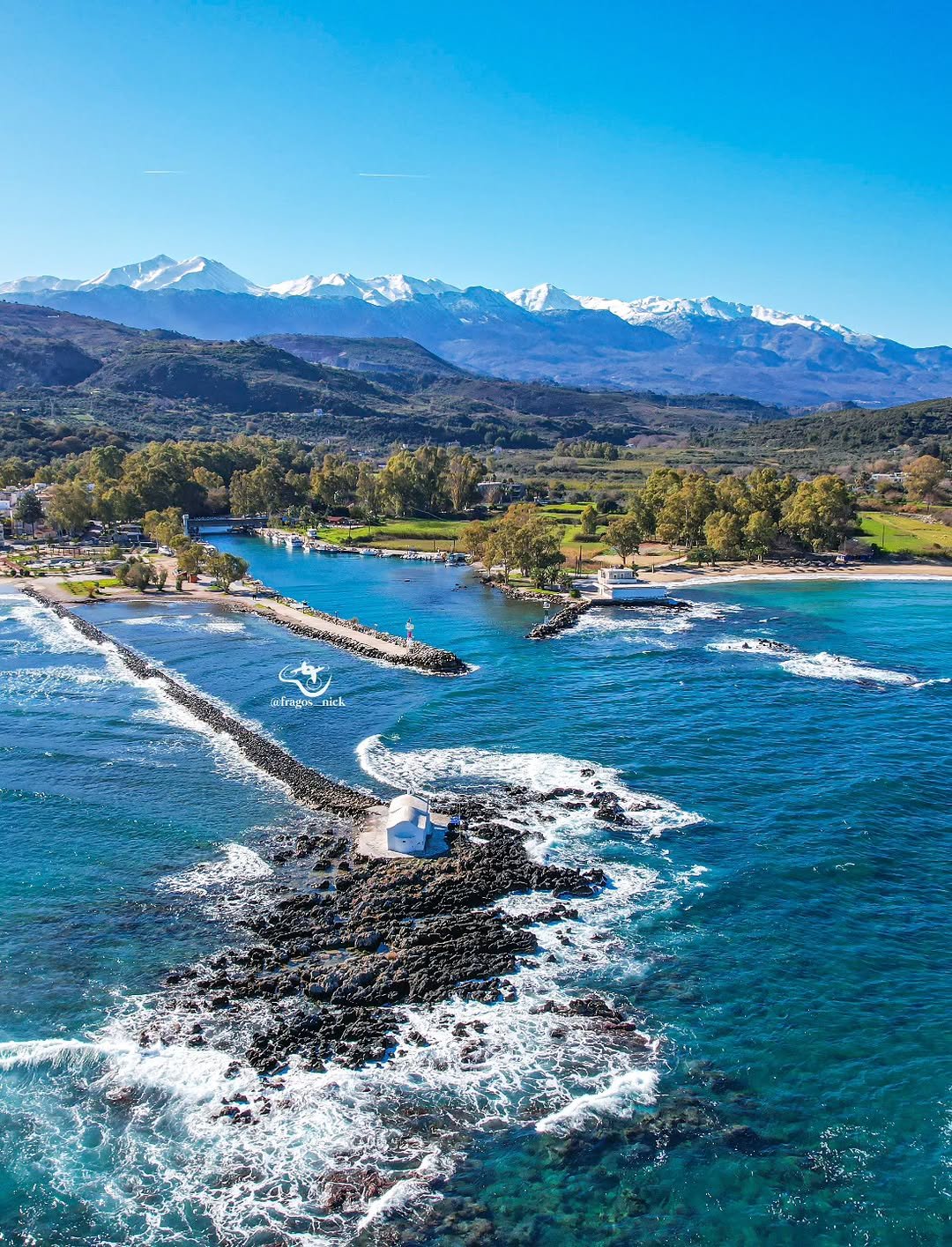
Everyone knows Chania for its Venetian harbour, the pastel buildings, the lighthouse at sunset. It’s one of the most photographed spots in Greece, and for good reason. It’s easy to wander through and never think about what came before. But this is one of the oldest continuously inhabited places in Europe, and its history is anything but gentle. Sieges, empires, secret burials, and sacred obligations to strangers are all woven into these streets. A city where one man’s quick thinking and a “holy” olive tree saved an entire village from massacre. Here are nine things you probably didn’t know.
1. Secret tunnels and a quick-thinking villager
Beneath parts of Chania’s Old Town lie underground passages that most visitors never think about. These tunnels date back to the Venetian and Ottoman eras, carved out for storing supplies, moving soldiers, and sheltering civilians when the city came under attack. They weren’t romantic hideaways. They were survival.
But the most remarkable tunnel story doesn’t come from the Old Town itself. It comes from Platanias, a village just outside Chania where, in 1942, German forces used local Cretans as forced labour to dig roughly 120-200 metres of tunnels into the hillside beneath the church of Agios Dimitrios. The chambers stored weapons and ammunition, and the work was brutal.
Here’s where it gets tense.
During the Battle of Crete, villagers in Platanias had nursed a heavily wounded German parachutist for several days. He didn’t survive. Fearing Nazi reprisals if the occupiers discovered his body, they buried him quietly in an unmarked grave near the church instead of in the village cemetery. Across occupied Crete, German forces carried out collective punishments, including executions and village burnings, for perceived resistance or “offences”, so the fear in Platanias was very real. The secret had to hold.
Then German officers chose that exact spot as the starting point for a new tunnel entrance.
Panic swept the village. Everyone knew that if the grave was uncovered, explanations might not matter. A local church commissioner named Mihalis Stamatakis reacted fast. He told the Germans that the olive tree standing there was holy, that its oil was used in religious ceremonies, and that it must not be touched. The officer believed him. The entrance was moved a few metres away. The grave stayed hidden. Platanias was spared the massacre that many locals believe would have followed.
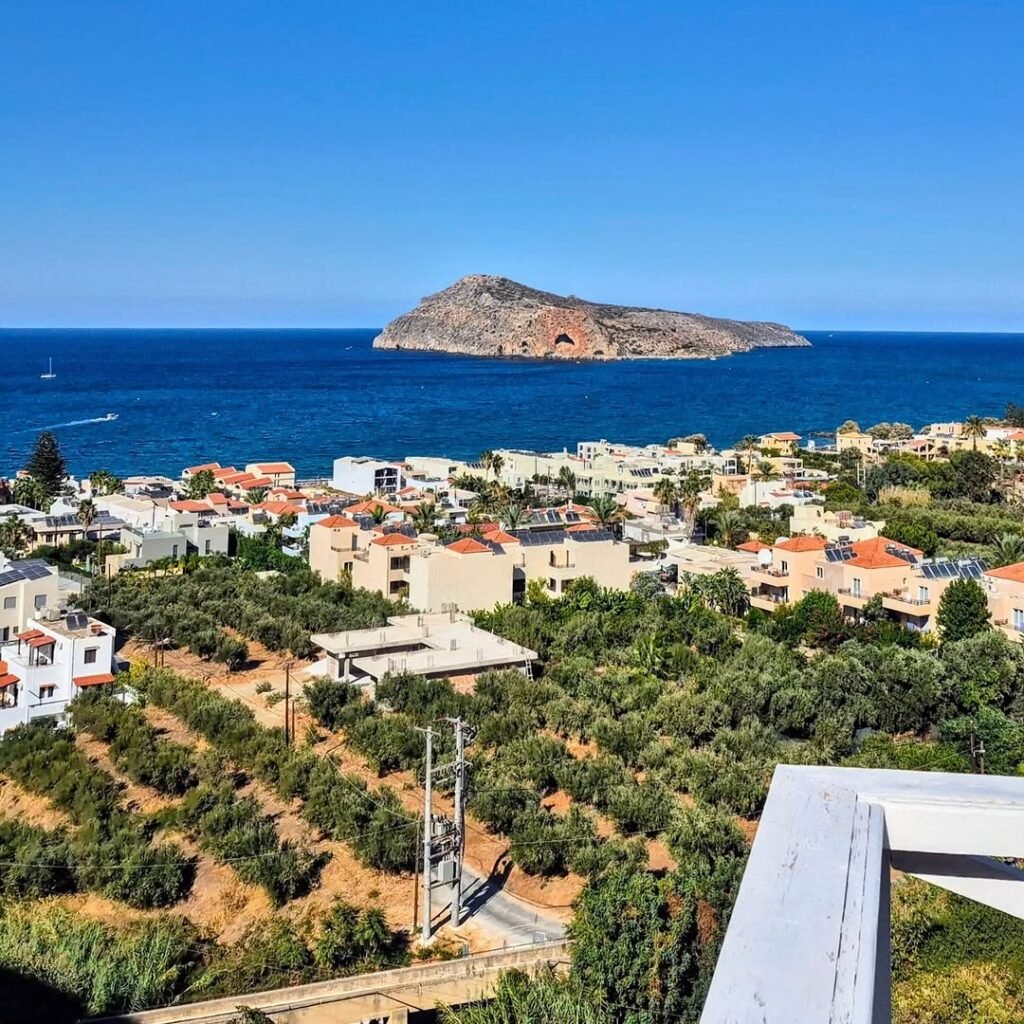
Today you can walk into the War Shelter of Platanias, now a small underground museum, past that same “holy” olive tree. German names are still scratched into the tunnel walls. It’s not on most tourist itineraries, but it probably should be.
2. A city that didn’t surrender quietly
Platanias wasn’t the only place in the region carrying a weight greater than its size. Chania itself has a history of defiance that goes back centuries.
When the Ottoman Empire set its sights on Crete in 1645, Chania was one of the most heavily fortified cities in the eastern Mediterranean. The Venetians had spent generations building and reinforcing its walls, knowing that whoever controlled this harbour controlled a crucial slice of the sea.
The siege began in June. The Ottomans hoped for a swift victory. They didn’t get one.
For roughly two months, Chania held out against one of the most powerful military forces of the age. The Venetian fortifications, the same walls you can still walk along today, absorbed bombardment after bombardment. When the city finally fell on 22 August 1645, it wasn’t a surrender born of weakness. It was exhaustion, attrition, the mathematics of war grinding down even the most stubborn defence.
The rest of Crete took far longer. The fortress of Candia, modern-day Heraklion, held out for another 21 years in what became one of the longest sieges in history. Chania’s two-month resistance was just the beginning. This was not an island that would be taken easily.
The Ottomans eventually took the island, but Chania refused to fade into the background. Quite the opposite.
3. Chania was once the capital of Crete
In the mid-19th century, Chania became the capital of Crete, formally taking on the role in 1851 under Ottoman rule. Most people assume Heraklion has always held that title. It hasn’t. For over half a century, Chania was the island’s administrative heart, from the late Ottoman period through the autonomous Cretan State and into the early decades after union with Greece, until the capital finally moved to Heraklion in 1971.
That long capital era brought foreign consulates, grand neoclassical mansions, and new public buildings rising outside the old Venetian walls. It’s why modern Chania feels unusually cosmopolitan for a town of its size, why certain streets have that unexpected elegance, and why the city carries itself with a quiet confidence that goes beyond its harbour views.
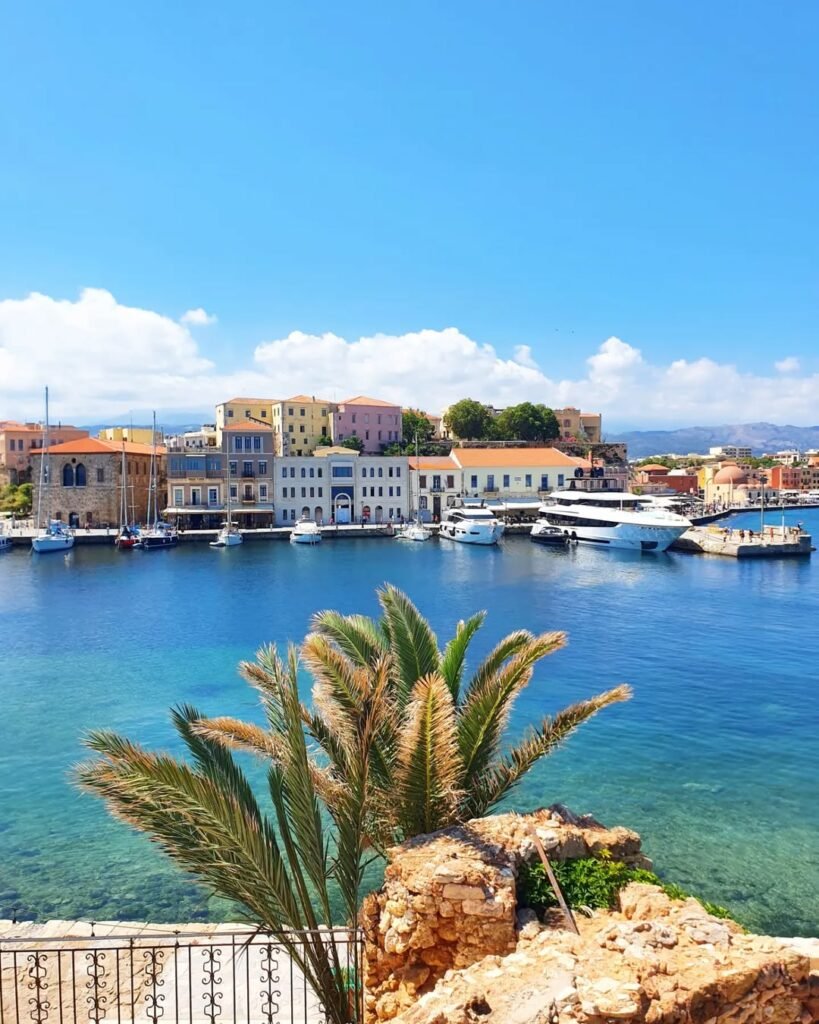
And this confidence? It’s built on something even older. The ground beneath Chania holds layers that go back thousands of years.
4. What lies beneath the Old Town
The ground you’re standing on has been inhabited for over five millennia. Chania sits directly on top of Ancient Kydonia, one of the most powerful cities of Minoan Crete, often ranked just after Knossos and Phaistos in importance.
Archaeological finds on Kasteli Hill in the Old Town show continuous habitation from around 3600-3500 BC, with layers running from early Minoan through later Greek and Roman phases, right up to the Byzantine, Venetian, and Ottoman periods. Dig down beneath the cafés and narrow streets and you’d hit Minoan levels, then classical and Roman, each era stacked on top of the last like a historical cake. People have been living, trading, and arguing on this same patch of earth for longer than most civilizations have existed.
The name Kydonia itself echoes through ancient myth. Some traditions link it to Cydon, said to be a son of Hermes and Akakallis, a daughter of King Minos. The city beneath modern Chania is archaeologically real, but its foundation story is wrapped in legend, tying it straight into the Minoan royal line. This wasn’t some minor settlement. It was a place that mattered.
And the Kydonians left their mark beyond Crete. Ancient sources mention a cult of “Cydonian Athena”, with a temple at Phrixa in Elis, said to have been founded by a man from Cydonia, evidence that the city’s religious traditions travelled to mainland Greece. Long before package tourists, Kydonia was already exporting ideas, goods, and gods across the Mediterranean.
Speaking of things that travelled and transformed, there’s a lighthouse at the harbour you’ve probably already photographed. Its story is stranger than it looks.
5. The lighthouse that became a minaret
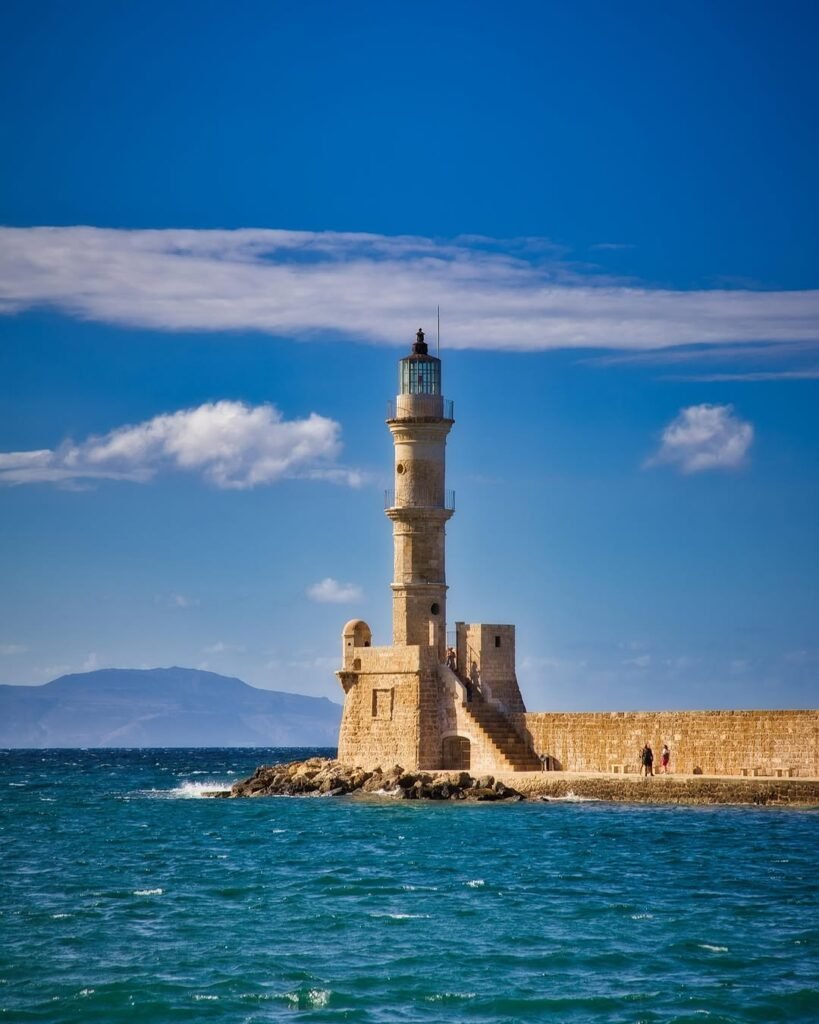
Chania’s lighthouse is one of the most photographed spots in Crete. It stands at the entrance to the Venetian Harbour, slender and golden against the sea, looking like it’s always belonged there. But look closer and something doesn’t quite fit. It doesn’t look like a typical European lighthouse. It looks more like a minaret, one of those slender towers beside a mosque from which the call to prayer is announced.
That’s because, for a while, it basically was one.
The original structure was built by the Venetians in the 16th century, part of the maritime defences for what they called La Canea. It guided ships into one of the most important harbours in the eastern Mediterranean. When the Ottomans took control, the lighthouse fell into disrepair.
Then, in the early 19th century, Egyptian forces administering Crete on behalf of the Ottoman Empire rebuilt it. They gave it the form you see today: that distinctive, tapering silhouette that echoes mosque architecture rather than anything Venetian. It’s a small detail that holds centuries of history. One lighthouse, two empires, three identities.
Next time you’re standing there watching the sunset, remember you’re looking at a building that changed shape as power changed hands. Crete has always absorbed its conquerors and made something new.
But before you spend too long admiring the view, there’s a breakfast ritual you shouldn’t miss. And it’s been running since 1924.
6. Bougatsa: the breakfast that defines the city
In Chania, mornings have a ritual. Before the tour groups fill the harbour, before the sun gets too fierce, locals queue for bougatsa. Not just any bougatsa. The Chania version.
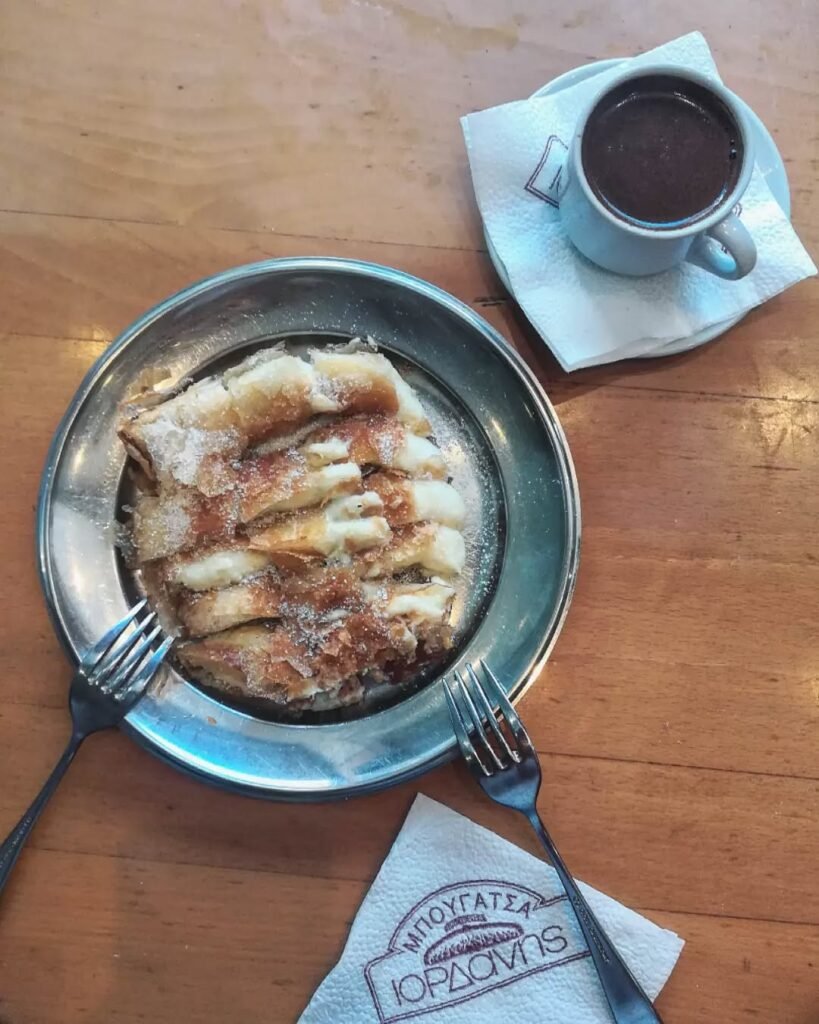
While bougatsa exists all over Greece, Chania is famous for its own take: impossibly thin layers of phyllo wrapped around soft, salty myzithra cheese, then dusted with sugar and cinnamon so you get sweet and savoury in every bite. It shouldn’t work. It absolutely does.
The institution to know is Bougatsa Iordanis on Apokoronou Street, operating since 1924. That’s four generations of the same family, the same closely guarded recipe, the same crisp-from-the-oven phyllo that shatters at the first bite. The founder, Kyriakos Iordanis, arrived from Asia Minor during the population exchange of the early 1920s. He brought his recipe with him, and it hasn’t changed since.
Go early. Sit with the old men reading newspapers. Order it hot with Greek coffee. This isn’t a tourist experience dressed up as tradition. It’s just breakfast, done the same way for a hundred years.
And that insistence on feeding you properly? On making sure you never leave a table hungry? That’s not just Chaniot hospitality. It’s something older, something with divine origins. Literally.
7. Why you’ll never leave a Cretan table hungry
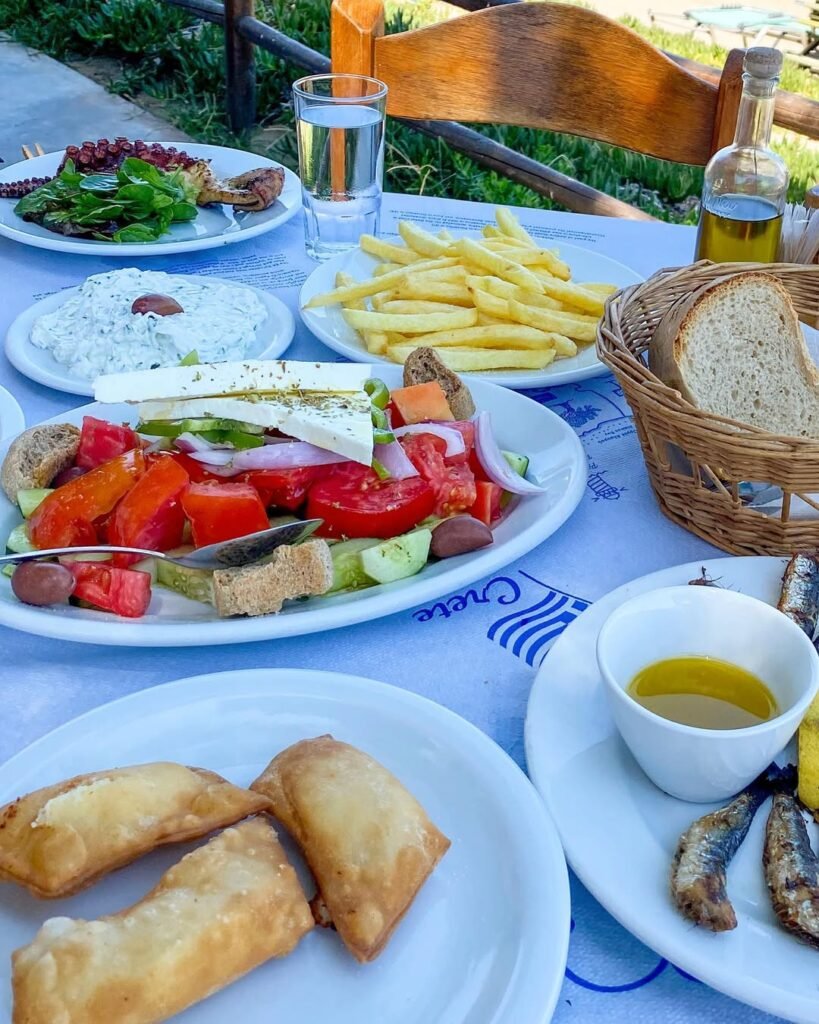
If you’ve spent any time in Crete, you know the routine. You finish your meal. More food arrives. You insist you’re full. They insist harder. You leave stuffed, possibly carrying a bag of fruit someone pressed into your hands on your way out the door.
This isn’t just hospitality. It has ancient roots, and a god behind it.
The tradition traces back to Zeus Xenios, not a different god but Zeus himself in his role as protector of strangers and punisher of bad hosts. The “xenios” part comes from “xenos,” meaning stranger or guest. In Greek mythology, you never knew when a traveller knocking at your door might be a god in disguise. Turning someone away, or feeding them poorly, was more than rude. It could bring divine consequences.
And Zeus, according to myth, was born and raised in the mountains of Crete. The Cretans took this personally. Hospitality wasn’t just good manners. It was a sacred obligation, watched over by a god who happened to be local.
Thousands of years later, the theology may have faded, but the habit hasn’t. When a Cretan grandmother pushes a third plate of lamb towards you, she’s not just being generous. She’s part of a tradition older than the Parthenon.
Speaking of ancient landscapes, most visitors never realise how dramatically the scenery changes just a short drive from the harbour. Beach loungers and mountain deserts exist surprisingly close together.
8. From sea level to alpine desert in under two hours
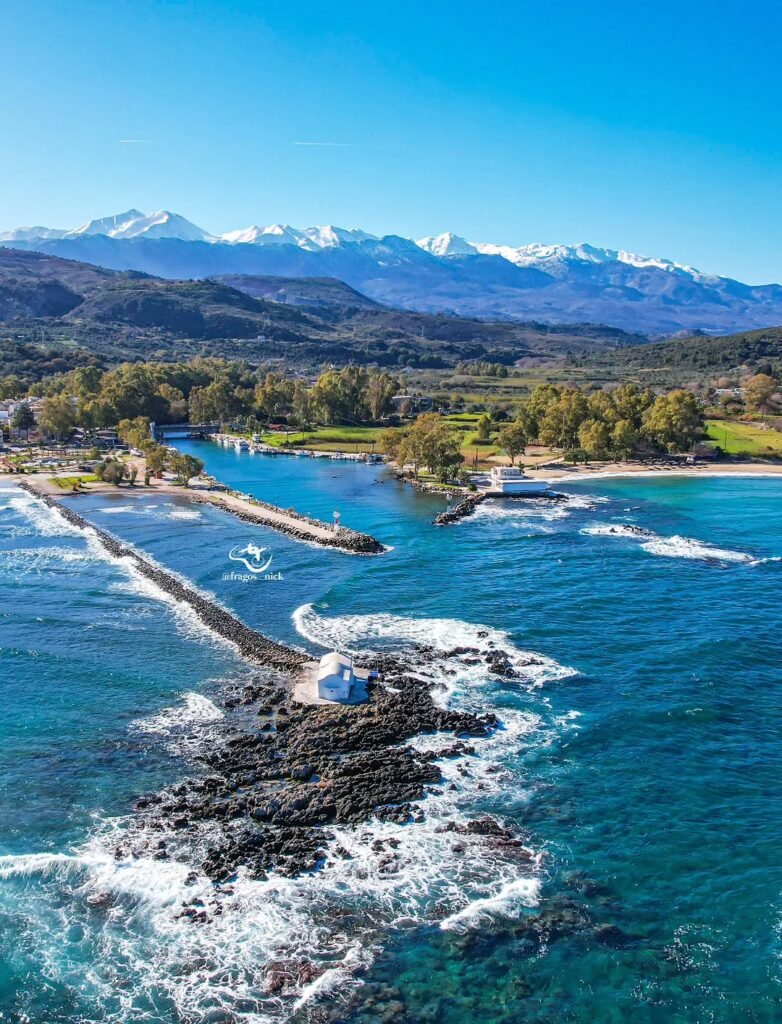
Most visitors come to Chania for the beaches. They soak up the sun, swim in clear water, and never think about what’s looming just inland. But turn your head south and you’ll see them: the Lefka Ori, the White Mountains, rising like a wall behind the coast.
This is one of Europe’s most dramatic landscapes, and almost no one talks about it.
The White Mountains include over 50 peaks above 2,000 metres. At the top, you’ll find something unexpected: a high-altitude desert of bare limestone and sinkholes, one of the few alpine deserts in Europe. It looks almost lunar up there, stark and pale, a world away from the olive groves and harbourside cafés below.
Within a short drive from the Venetian Harbour, you can go from sea level to this barren plateau, then drop into gorges like Samaria, one of Europe’s longest. Beach in the morning, mountain wilderness by lunch, gorge hike by afternoon. Most visitors stick to the coast and never realise this is possible in a single day.
Chania’s geography holds extremes that don’t seem like they should fit together. The same is true of its spiritual history. In one short walk through the Old Town, you can pass buildings sacred to three different faiths.
9. Three faiths in one maze
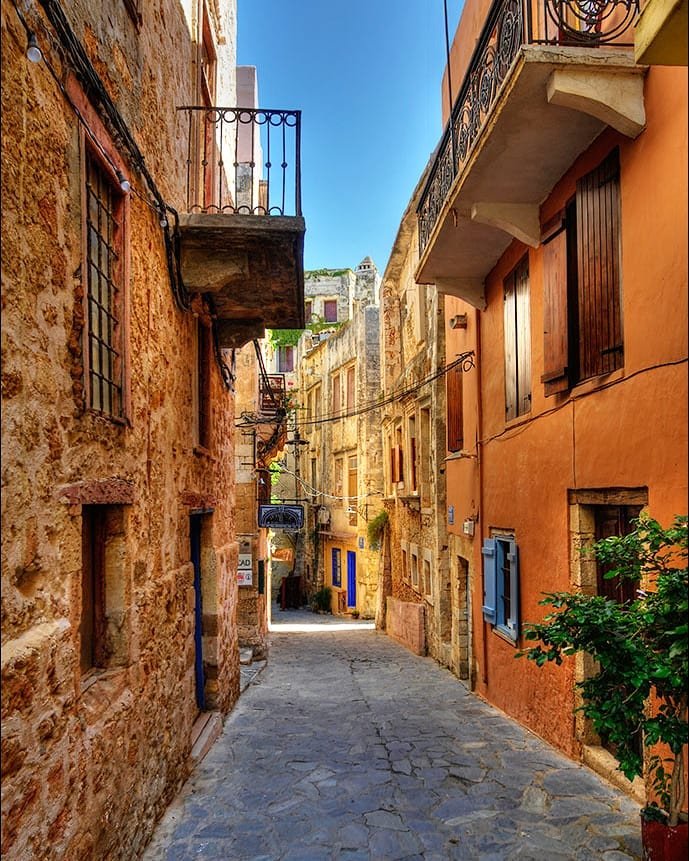
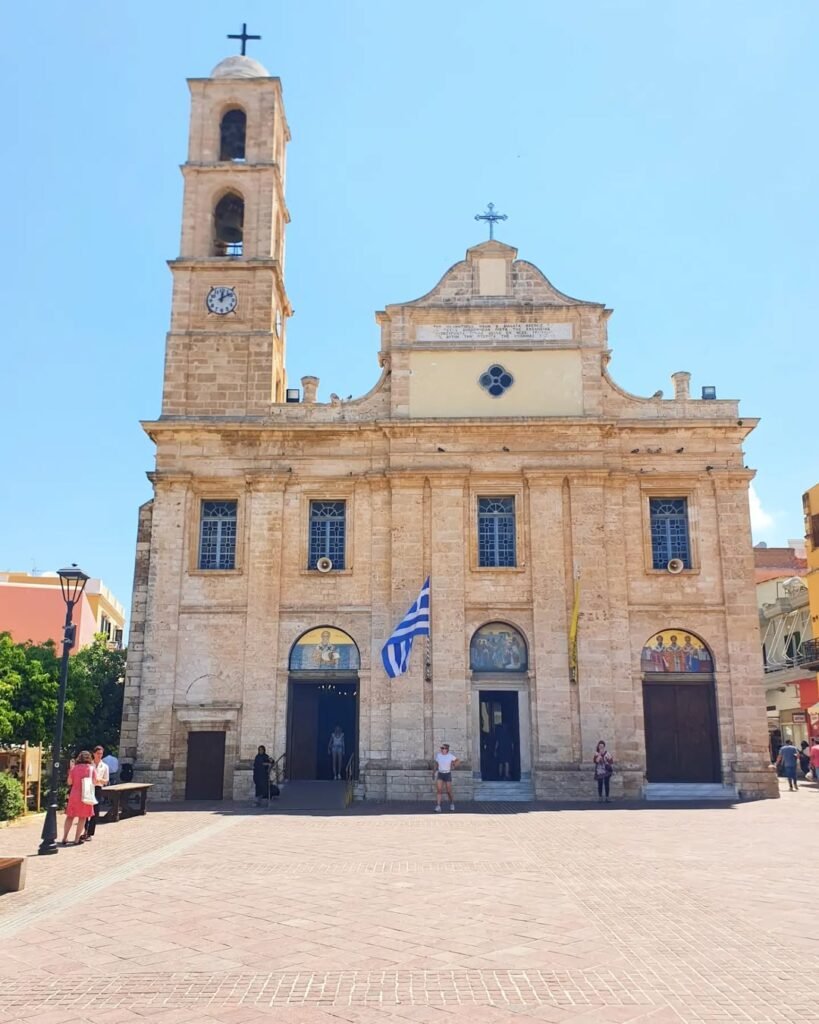
Walk through Chania’s Old Town and you’ll pass centuries of belief layered on top of each other. A Venetian church here. An Ottoman mosque there. A synagogue tucked down a quiet alley. All within a few hundred metres.
This isn’t an accident. Under Ottoman rule, Chania’s population included Muslims, Orthodox Christians, and Jews, each community leaving its mark on the dense urban fabric. The Yali Tzamii mosque still stands by the harbour, its dome unmistakable against the waterfront. Venetian churches were converted, reconverted, repurposed. The Jewish quarter, Evraiki, occupied its own corner of the labyrinth.
The Etz Hayyim Synagogue, tucked away on Parodos Kondilaki, is one of the most moving spots in the city. It’s the only surviving synagogue on Crete. The Jewish community here was almost entirely wiped out in 1944 when a British torpedo sank the ship deporting them to Auschwitz. The synagogue was later vandalised and left to decay. Today it’s been carefully restored, a place of memory and quiet reflection.
In a fifteen-minute walk, you move through spaces that were sacred to Catholics, Orthodox Christians, Muslims, and Jews. Not as museum pieces. As living layers of a city that absorbed everyone who came, and still holds traces of them all.
Conclusion
Chania is one of those places that rewards curiosity. You can visit for the sunsets and the seafood and have a wonderful time, but scratch the surface and you find tunnels, sieges, sacred olive trees, and layers of history stacked five thousand years deep. Whether this is your first trip or you’ve been coming back for years, I hope you found something here that changes how you see the city. Maybe you’ll pause at that lighthouse and think about empires. Maybe you’ll walk a little more slowly through the Old Town, knowing what lies beneath your feet. Or maybe you’ll just have a new story to share over bougatsa and coffee.
Which of these facts surprised you most? I’d love to hear in the comments.
Published: January 17th, 2026
Further reading:
Top 16 Bakeries in Chania, Crete (Bakeries of Crete Series – Part 2)
15 Amazing Day Tours From Chania You’ll Wish You Knew About Sooner
19 Traditional Cretan Tavernas in Chania Region That You Must Try

Kalimera! What a wonderful article! We’ve been visiting Chania for over 30 years now and just love the people, history and landscapes. But there are things here I never knew about. I am saving this article to refer to on our next visit in a May.
Thank you,
Joanna
Kalimera Joanna!
I’m so glad there were a few new discoveries here for you, even after you’ve been visiting Chania for 30 years! May is such a beautiful time to visit, before the summer crowds arrive and when everything is still green. I hope you enjoy exploring some of these spots on your next trip!
Με πολλή αγάπη – with much love,
Bella 💙
Bella, are you able to give me a tour of Chania. I’ll be there from June 13th leaving morning of June 16 2026
Kalimera Brenda! I’m truly touched that you’d trust me with your Chania experience, that means so much! Unfortunately, I’m not currently living permanently in Crete. I come and go throughout the year, and I’m not confident I’ll be on the island during your visit. One day, when I’m living there all year round, offering personal tours is something I’d love to consider. In the meantime, I hope this article and others on the site help you discover some lesser-known gems during your trip.
Με πολλή αγάπη – with much love,
Bella 💙