
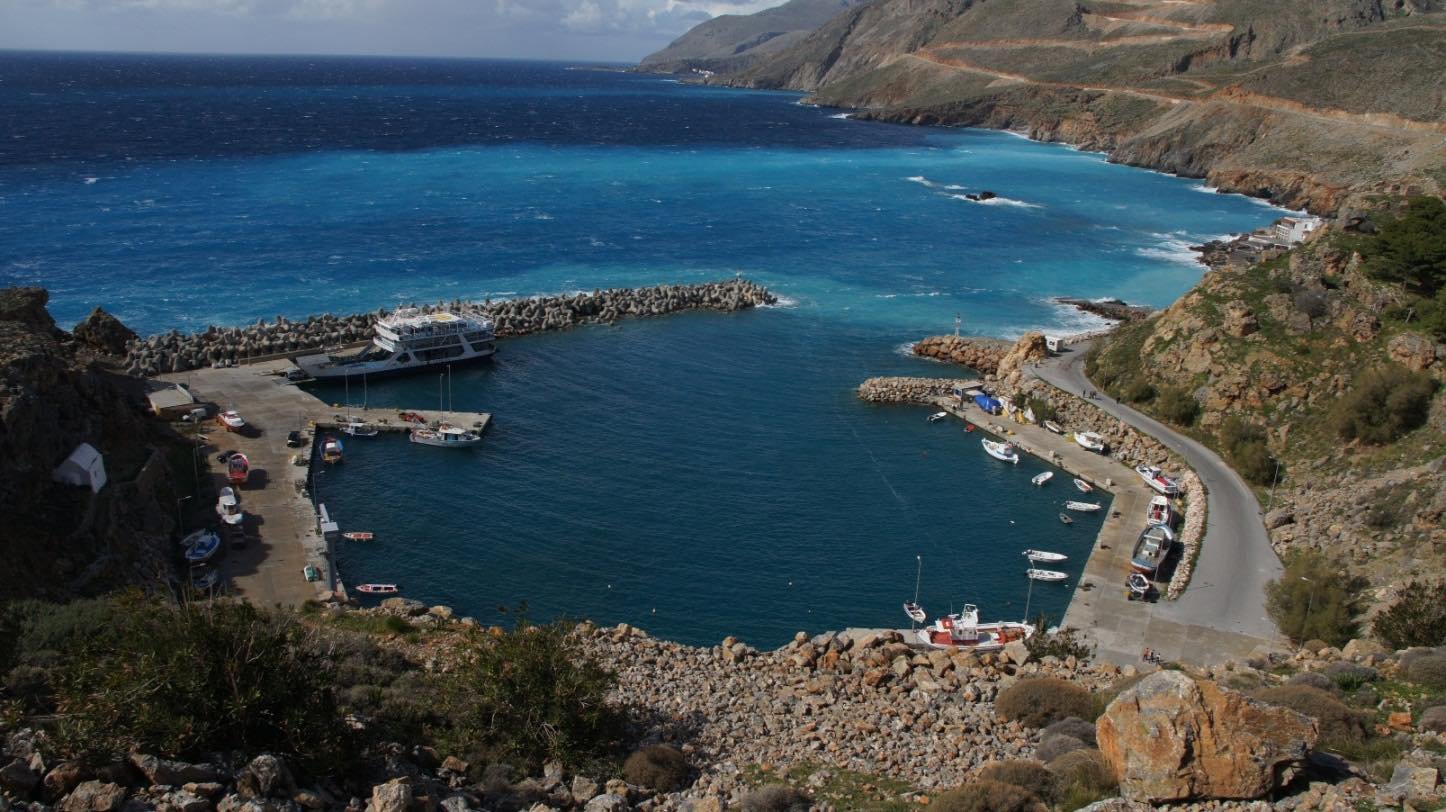
A major infrastructure project that nearly lost its funding over environmental concerns has received final approval, positioning Sfakia’s Mavros Limnona port for a transformation that will reshape how visitors access one of Crete’s most remote and traditionally preserved coastlines.
The €17.3 million expansion, approved by the Ministry of Maritime Affairs on 31 December 2025, will include a new roughly 270-metre windward breakwater, around 215 metres of new internal quays, and reclaimed land added to a harbour that already processes approximately 150,000 passengers annually. Officials frame it as essential for safety and regional development. Critics worry it will funnel unprecedented visitor numbers into fragile coastal villages that have, until now, been protected by their own inaccessibility.
[Personal Reflection at the end of this article.]
What Has Been Approved
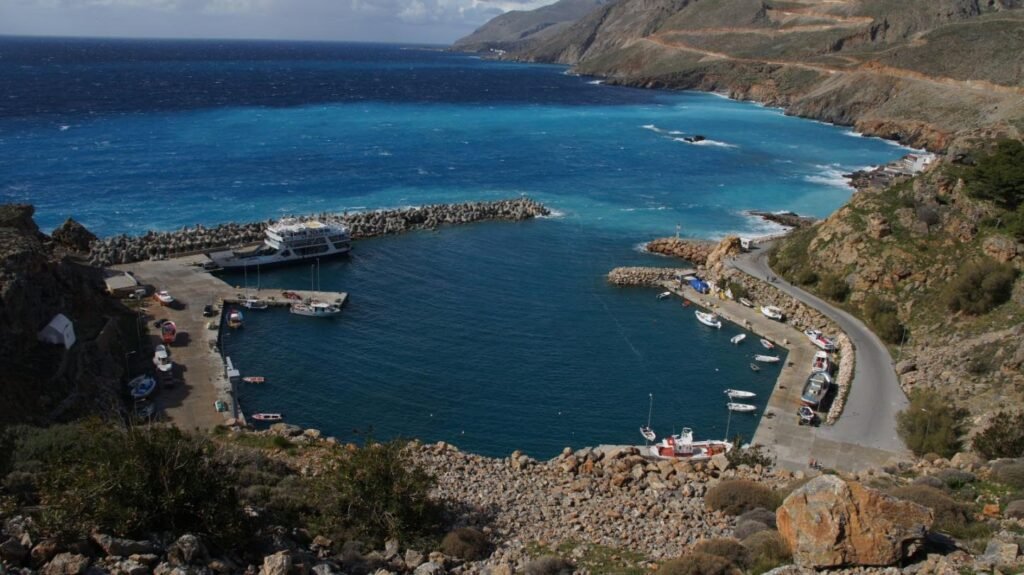
The approval, signed by Secretary-General Evangelos Kyriazopoulos, authorises the Chania Port Fund to proceed with construction. The project includes a curved windward breakwater designed to shield the basin from south winds and swell, expanded berthing capacity through new internal quays, and land expansion through infill behind the quays.
A separate agreement between the Deputy Regional Governor of Chania, Nikolaos Kalogeris, and the Chania Port Fund president commits to improving road connections between the port and the provincial network.
The port has operated since 1988 and currently serves as the primary maritime gateway to south-coast destinations including Loutro, Agia Roumeli, Sougia, Palaiochora, and the island of Gavdos. According to the Chania Port Fund’s operational data, Sfakia port handles roughly 150,000 passengers and 6,000 vehicles per year, with additional passenger movement of approximately 50,000 on the coastal shipping lines.
Official Justification
Sfakia Mayor Ioannis Zervos has emphasised safety and economic benefits. The current harbour faces persistent challenges including wave overtopping during adverse weather, which can strand ferry passengers and disrupt schedules for Samaria Gorge hikers returning from Agia Roumeli.
“Beyond the gains resulting from improved infrastructure, the port’s expansion and its overall enhancement, it will also facilitate passenger access and improve accessibility to coastal areas, while it is expected to contribute significantly to the further development of tourism, visitor numbers and the local economy,” the mayor stated.
Chania Port Fund president Dimitris Virirakis described the approval as a “New Year’s gift that has landed in Sfakia.”
Environmental Objections Nearly Derailed the Project
The project has a formal Environmental Impact Assessment (Μελέτη Περιβαλλοντικών Επιπτώσεων). However, during the approval process, environmental objections were raised that came close to having the project removed from funding entirely.
The municipality’s own announcement acknowledges this, with Mayor Zervos thanking New Democracy MP Dora Bakoyannis for interventions that “averted, by common acknowledgment, even the possibility of the project being removed from funding due to objections related to environmental concerns.”
The specific content of those objections, who raised them, and what scientific arguments were made, has not been made publicly available. What is clear is that the concerns were serious enough to threaten the project’s funding and that high-level political intervention was required to push it through.
A Coast Protected by Its Own Inaccessibility
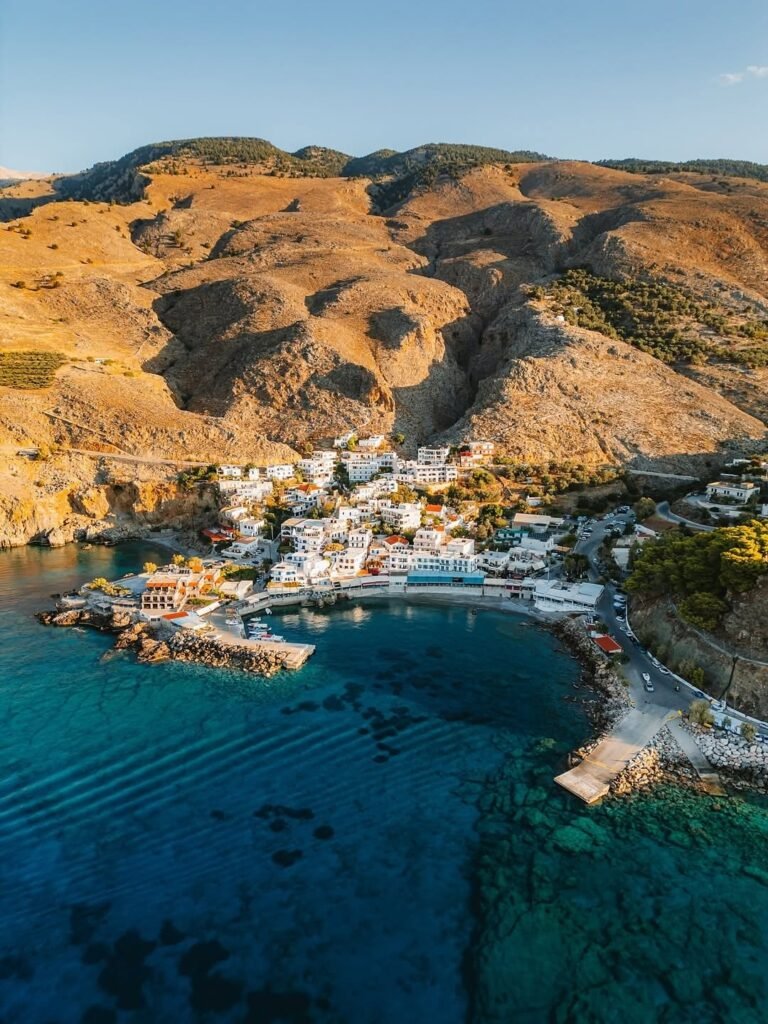
Sfakia’s south coast has remained relatively untouched precisely because access is difficult. Villages like Loutro, reachable only by boat or on foot, are often described as having escaped the overdevelopment seen in more heavily touristed parts of Crete. There are no big hotels, no crowded streets, no cars.
The port expansion is explicitly designed to remove the friction that has kept visitor numbers naturally limited. Weather-related ferry cancellations, while inconvenient, have functioned as an informal cap on how many people can move through the system on any given day.
The Samaria Gorge, whose hikers depend on the Agia Roumeli-Sfakia ferry connection, already draws descriptions in travel guides of being heavily congested in the height of summer. Expanding port capacity and reliability will increase passenger volume on this route.
Gavdos: An Island Already at Capacity
One of the project’s stated goals is improving connection to Gavdos, Europe’s southernmost inhabited point. The island has fewer than 100 permanent residents but swells to more than 3,000 people in summer, many of them free campers.
Gavdos’ leadership has publicly warned about limits. In an interview, the island’s mayor stated that the carrying capacity of the island must be defined immediately and measures taken when it is exceeded, so that irreparable damage to the island’s future can be avoided. The mayor emphasised that Gavdos’ unique beauty and identity must be protected at all costs, with balanced development between tourism and environmental safeguards.
The mainland is now investing €17.3 million to push more visitors more reliably to an island whose own leadership is calling for carrying-capacity limits.

Water Infrastructure Under Pressure
In December 2025, the same month the port expansion was approved, the Municipality of Sfakia announced a separate project to improve water supply infrastructure in Anopoli. The project involves installing a new network from a new borehole to existing reservoirs, explicitly framed as addressing water sufficiency during high-consumption periods.
The mayor presented this as part of a broader goal to “avoid water shortage problems in the municipal units during periods of high consumption,” suggesting that the current system has been under strain.
Regional media in Chania have reported water supply problems and emergency outages during summer months across the prefecture, driven by aging infrastructure and high demand. Scaling up port-driven visitor flows adds pressure to a water system that is still being stabilised.
A Vision From a Different Era
The municipality’s announcement honours the late former Mayor of Sfakia, Ioannis Braoudakis, who “fought for this specific project over a series of years (1999-2002), offering not only his administrative efforts but also his personal time, and even contributing financially to his vision of a dignified and functional port at Mavros Limnona.”
In the late 1990s and early 2000s, the case for a safer port was primarily about ensuring a reliable lifeline for remote villages, not about feeding high-volume international tourism. The Samaria Gorge was important but not yet operating at today’s scale. Independent car tourism, organised hiking holidays, and the “discovery” of south-coast beaches by international visitors simply did not exist at current levels.
The tourism landscape 25 years later is radically different. The port already processes around 150,000 passengers annually. The expansion is now marketed as a regional tourism growth engine.
Personal Reflection
Editor’s Note: The following represents personal views.
I have been dreading writing this piece.
Not because the facts are hard to find, but because I know what they point toward. Another corner of Crete that has survived precisely because it was difficult to reach is about to become easier to access. And we all know what happens next.
The south coast of Sfakia is not like the north. No airport runways. No four-lane highways. No all-inclusive resorts. The villages along this coast have remained something increasingly rare in the Mediterranean: places where the landscape still dictates the pace of life, not the other way around.
That inaccessibility is not a flaw to be fixed. It is the feature that has preserved these places.
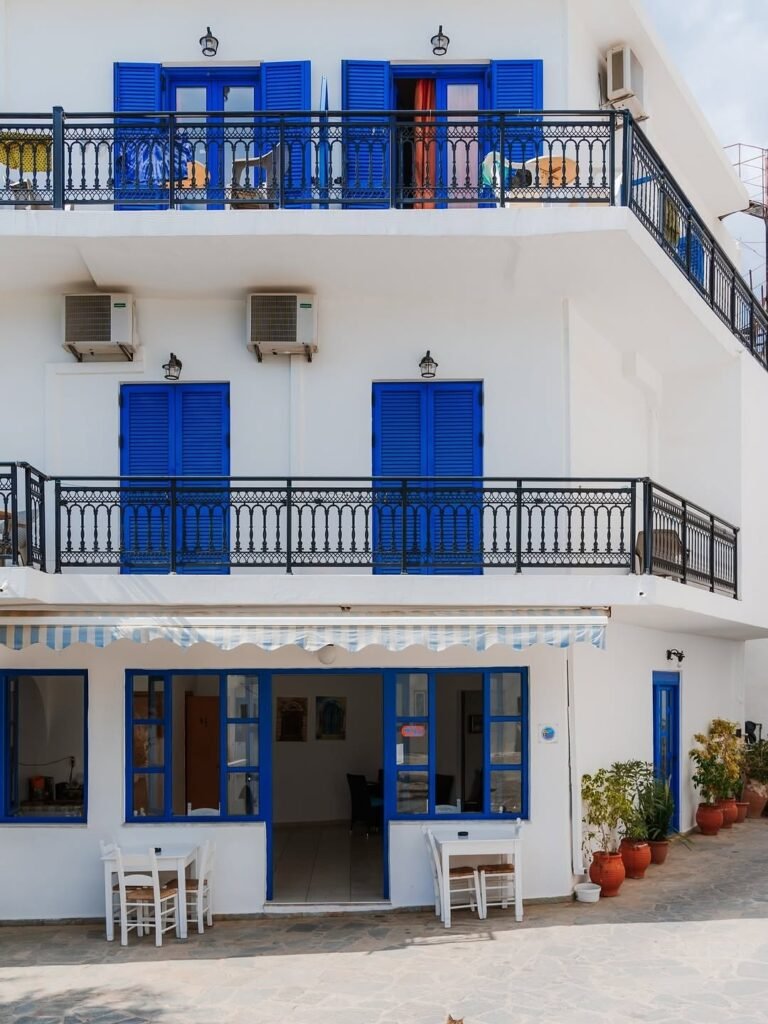
When ferries get cancelled because of rough seas, yes, it is inconvenient. But that friction is what keeps the numbers manageable. It is what ensures Loutro remains a village of whitewashed houses around a quiet bay rather than a cruise-ship stop. It is what gives Gavdos a chance to remain Gavdos.
Now we are removing that friction. And the explicit goal, stated openly in the official announcements, is to increase tourism, visitor numbers, and extend the season.
The environmental objections that nearly killed this project were never made public. We do not know what was flagged. All we know is that those concerns were serious enough to threaten the funding, and that it took political intervention from a prominent MP to push it through anyway.
That alone should give us pause.
I understand the arguments for the expansion. The port has safety issues. Weather disruptions are real. Former Mayor Braoudakis fought for this decades ago because he believed his community deserved a dignified harbour.
But the Sfakia of 1999 is not the Sfakia of 2025. The port already handles 150,000 passengers a year. The Samaria Gorge is already packed in summer. The water infrastructure is already being patched with emergency borehole projects to keep up with demand.
And somehow the answer is always more. More capacity. More visitors. More infrastructure to handle the increased load that the previous infrastructure enabled.
I come from Malta. I watched my home island transform over 15-20 years from a place with its own distinct character into something unrecognisable. Overdevelopment, luxury projects, infrastructure expansion, always with the same justifications: economic growth, jobs, modernisation, keeping up with demand. The demand that the previous round of development created.
The pattern is always the same. First the infrastructure. Then the increased access. Then the increased numbers. Then the pressure on water, on housing, on the social fabric. Then more infrastructure to handle the pressure. Then more numbers. The cycle does not stop until there is nothing left worth visiting.
Sfakia’s south coast is one of the last stretches of Crete that has not yet been fed into this machine.
For centuries, invaders found it easier to leave Sfakia alone than to try to conquer it. The terrain was too harsh, the people too stubborn, the access too difficult.
Now we are making it easy.
I hope I am wrong about what comes next. But I have seen this story before. And it rarely ends that way.
Published on January 8th, 2026
Further reading:
20 Sweet Treats in Crete That Will Ruin All Other Desserts for You
7 Beaches in Crete That Might Be Better Than Elafonissi Beach
€800 Million Elounda Development Signals Shift Toward Ultra-Luxury Tourism in Crete
